
Context in which the project offer was developed
One of the biggest challenges of the 21st century is to ensure enough healthy food for the population that is, globally, growing. At the EU level, research and innovation in animal nutrition are fundamental in supporting the animal breeding sector and represent the most profitable investment for this industrial sector (FEFAC, Vision on animal nutrition, 2016). In the last 20 years, through the “form Farm to Fork” concept, nutrition and animal nutrition have come to the fore with innovative solutions. The objective of innovative activities in animal nutrition is to give relevant, consistent answers to the demands of current animal production but also to the demands of consumers who are increasingly vocal. In this regard, feed recipes are rethought both in terms of the ingredients used and their structure. But these recipes, no matter how sophisticated they are, have an impact in production only if they also generate economic benefits. In poultry units, feed expenses represent 60%-70% of the total production costs. For this reason, any analysis of production costs and profitability must begin with an analysis of feed costs, which are the main factor of the economic exercise.
The purpose of the project
In the context presented above, a consortium formed by an economic agent (SC Avicola Lumina SA), two national institutes in the field of animal nutrition (IBNA Balotești) and the environment (ECOIND) as well as a higher education unit (USAMV Bucharest – Faculty of Veterinary Medicine) have proposed the implementation of a project whose goal is to increase the competitiveness of SC Avicola Lumina SA, producer of chicken eggs, by implementing environmentally friendly cellulose-rich fodder recipes and to determine both the reduction of production costs as well as increasing the nutritional quality of eggs.
The provided objectives
- The development of innovative nutritional solutions, supported and validated by numerous and consistent interdisciplinary scientific data, which meet the requirements of the industrial environment regarding the efficient conversion of feed into foods with high nutritional qualities and sustainable growth. Research and innovation in animal nutrition are fundamental in supporting the animal breeding sector in the EU under the policy of eliminating the traditional linear economic model in favor of a circular and regeneration model.
- Increasing the competitiveness of SC Avicola Lumina by reducing feed costs, high productive performance, and profitability as a result of the use of innovative nutritional solutions validated in the production halls, which meets the market’s requirements for specialized nutritional solutions. A complex requirement, with multiple dimensions, connected to the bioeconomy that generates, among other things, economic growth, sustainable development, well-being.
- Obtaining eggs with certain nutritional qualities, an aspect that responds to the growing demand for animal protein, globally, in a constantly changing context. There are scientifically proven premises that the presence of cellulose, at certain levels, in the feed of laying hens can produce eggs with functional food qualities.
- The development of nutritional solutions corresponding to the requirements of sustainable development by using vegetable by-products and reducing the impact of the process of raising laying hens on the environment. 10 years after the FAO report “Livestock’s Long Shadow” (November 29, 2006) regarding the significant impact of animal husbandry on the environment, producers in this field must respond with innovative approaches. Innovative nutritional solutions are more part of the solution than part of the problem
- The development of a partnership between the economic agent (SC Lumina), two national institutes in the field of animal nutrition (IBNA) and the environment (ECOIND) as well as a higher education unit (Faculty of Veterinary Medicine from USAMV Bucharest). This partnership aims to promote innovation at SC Lumina, a pillar of the bioeconomy that represents the renewable part of the circular economy concept promoted by the economic policies of the EU.
The implementation of the project and the results obtained at each stage.
STAGE Ia: Validation in laboratory conditions of the quality of some by-products rich in cellulose in order to develop a set of new nutritional solutions for laying hens
Specific objective of the stage Use of by-products from the food industry, in the presence of enzymes, as alternative feed materials. Approach that corresponds to EU policies to eliminate the traditional linear economic model in favor of a circular and regeneration model.
The results obtained because of the technical and scientific activities provided in the work plan:
►The project coordinator (SC Avicola Lumina SA) sent a set of feed raw materials to determine the primary chemical composition to partner 1 (IBNA Balotești): wheat bran, 2 sunflower straws, alfalfa granules, flax meal, soybean meal, rice bran and hydrolyzed yeast-
► The results obtained from the analysis of feed raw material samples showed that the highest concentrations of cellulose were determined in alfalfa, sunflower seeds and flax.
► According to the results obtained when determining the cellulose, samples of: alfalfa, sunflower meal and flax meal were transferred to partner 2 (ECOIND Bucharest) to determine the digestibility of cellulose in the presence of enzymes. To determine from which feed raw material and with which enzymes (Biozym M6000 or Kemzyme® Plus Dry) the cellulose is better digested, from the feed raw materials sent for analysis, in vitro analyzes were carried out.
► The most effective enzyme-plant substrate couple was formed from Biozyme M6000: alfalfa in a 1:1 ratio.
►Three new recipes (R1, R2 respectively R3) have been developed for chickens which, depending on the level of sunflower meal introduced, have a higher cellulose content than in the conventional recipe, with: 32.5% (R1) , 87.4% (R2), 145.4% (R3).
► Three new recipes (R1, R2 respectively R3) have been developed for chickens which, depending on the levels of alfalfa and rice bran introduced, have a higher cellulose content than in the conventional recipe, with: 16.5% ( R1), 84.0% (R2), 145.4% (R3). Rice bran was introduced to balance the protein energy content.
► Preparation, by increasing the ingesting capacity and increasing the volume of the goiter, of the chicks between 9-16 weeks for feeding in the adult phase with recipes rich in cellulose. This training started in the experimental halls at IBNA Balotești on an average herd of 268 Tetra chicks (9-16 weeks).
STAGE II : Validation of the new nutritional solutions rich in cellulose through micro tests carried out on laying hens at the level of experimental laboratory halls. Validation of the effectiveness of the nutritional solutions selected following the implementation of the micro test at the industrial level by transferring them to the Coordinator for the start of testing in the production halls
Specific objective of the stage Validation of the nutritional solutions developed in the previous stage through experimentation on laying hens at the level of experimental sheds, the ranking of the effectiveness of these nutritional solutions and the transfer of the best two nutritional solutions for experimentation at the level of production sheds.
The results obtained as a result of the technical and scientific activities provided in the work plan:
►Two micro-experiments were carried out in accordance with Romanian legislation, for 8 weeks on 288 chickens of the Tetra SL breed, aged 28 weeks, according to an experimental protocol approved by the members of the Ethics Commission of IBNA Balotești.
► In the first micro experiment, a recipe module was evaluated consisting of a conventional control recipe + 4 new recipes that included alfalfa cellulose, granules, in different proportions and the BIOZIM enzyme as a source of cellulose. The cellulose concentration was 3.71% in the control recipe and varied between 6.67-8.59% in the new recipes depending on the level of alfalfa used in these recipes. This recipe module was used to feed 5 batches: 1 control batch (M1) and 4 experimental batches (E1, E2, E3 and E4)
► In the second micro experiment, the second recipe module was evaluated, also consisting of a conventional control + 4 new recipes that included, as sources of cellulose, sunflower meal and alfalfa – granules in different proportions, as well as the enzyme with a role in cellulose degradation in the intestine by destroying the cellulolytic fractions. The cellulose concentration was 3.76% in the control recipe and varied between 7.59-8.62% in the new recipes. And this module was used to feed 5 other batches (M2, E5, E6, E7 and E8)
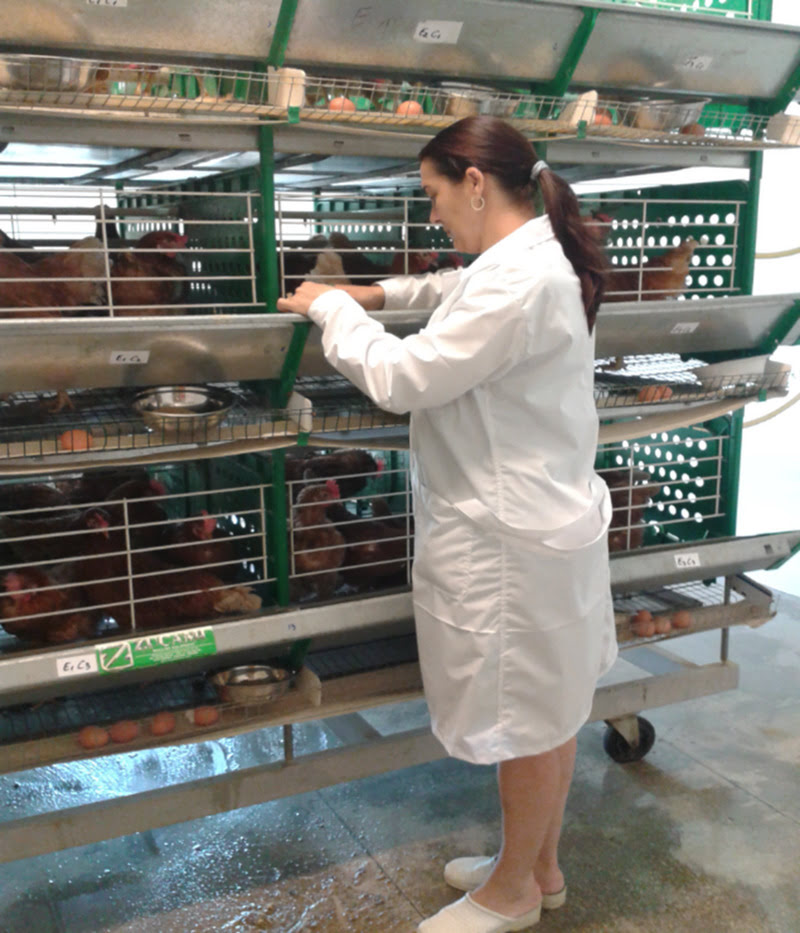
Chicken microtest hall - The experimental pavilion of IBNA
►The highest egg weight was recorded in the batches that had alfalfa (16.34%) and a level of 6% cellulose in the nutritional recipe structure. The Haugh unit values recorded in eggs harvested from hens fed the combined diets that had 6% cellulose were higher.
► After the slaughters performed during 24 h, the results obtained regarding the segments of the digestive tube analyzed, presented normal morphological aspects (USAMV Bucharest). The cecum, as the final segment of the digestion process, presented normal histological aspects.
► The amount of degraded / processed cellulose from the combined feeds is directly proportional to the amount of the cellulase enzyme used (in the case of Biozyme).
►The biochemical parameters determined in the blood collected at the end of the experiment showed that the level of cholesterol in the blood decreased with the increase in the level of cellulose in the ration
►The assessment of the impact of the tested fodder and manure samples on the environment was done at ECOIND by comparing the experimentally determined values for the physical-chemical indicators with the maximum allowed values established by the legislation: Order no. 344/2004 for the approval of the Technical Norms on environmental protection soils, when sewage sludge is used in agriculture. The obtained results showed that the fodder and manure analyzed have no potential impact on the environment.
► In order to rank the nutritional solutions tested and to choose the best nutritional solutions based on the performance of production/egg quality/cost/environmental impact, the AHP evaluation methodology (ECOIND) was used, which ended with the recommendation of two recipes, Experimental Recipe 1 and Experimental Recipe 2, for transfer to the production halls of the coordinator.
► During the chicks’ preparation period in the rearing halls at the coordinator, the birds reacted very well to the feeding of the new recipes, they kept the weight curve and reached the egg-laying peak and stayed on the egg-laying curve.
► For periods when the price of soybean meal increases, the new recipes, based on alfalfa and sunflower meal, represent a viable and economical alternative
STAGE III: Analysis of the significance of the results obtained in the macro test (at the industrial level) for increasing the innovation capacity of the economic agent, its contribution in obtaining functional eggs and increasing competitiveness.
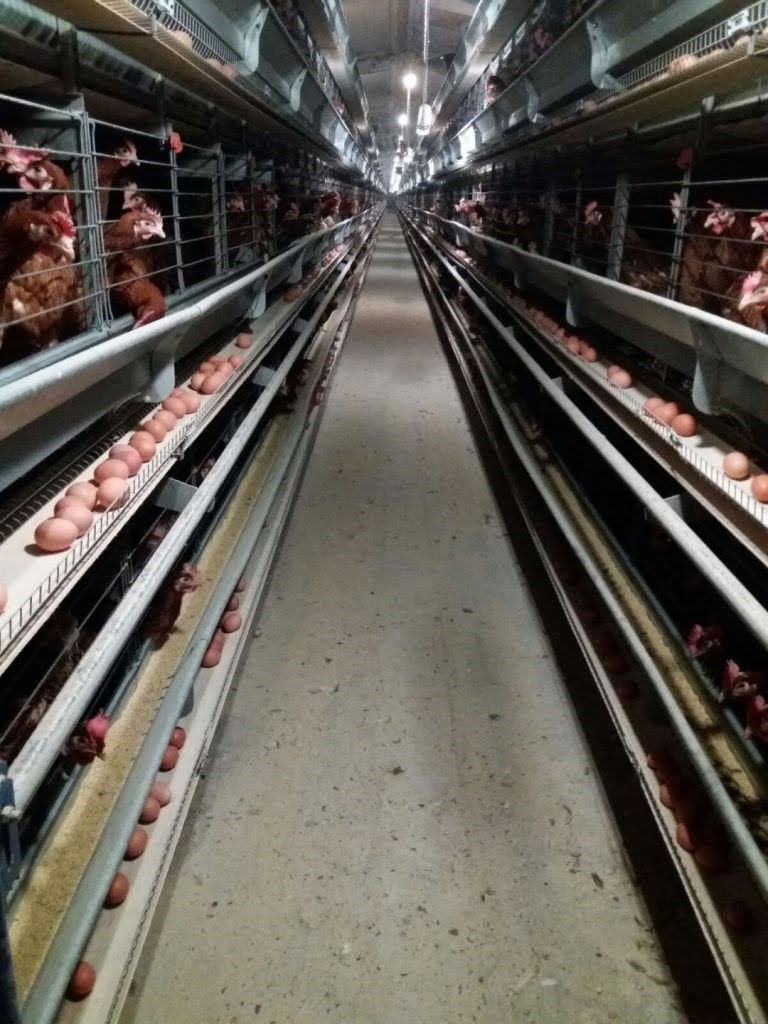
Production hall – Avicola Lumina
Specific objective of the stage Technical-financial analysis of the results obtained in the macro test by monitoring production parameters and costs.
In the production halls of SC Avicola Lumina were tested, compared to a hall with chickens fed with the conventional recipe used:
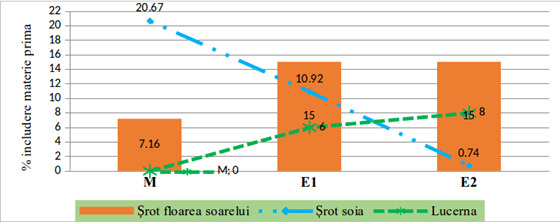
Experimental Recipe 1 which included granulated alfalfa 6% and sunflower meal 15%, premix with enzyme. The cellulose level being 6.71%
Experimental Recipe 2 which included granulated alfalfa 8%, sunflower meal 15%, enzyme premix and a natural antioxidant based on grape extract (0.015%). The cellulose level being 7.06%
RESULTS OBTAINED IN THE COORDINATOR'S PRODUCTION HALLS FOLLOWING THE IMPLEMENTATION OF THE 2 RECIPES SELECTED FROM THE EXPERIMENTED RECIPES
The production performances, as seen in the table below, were not affected by the use of the new feed recipes
Specification | BLANK |
|
|
The age of the birds | 25 – 45 weeks | 25 – 45 weeks | 25 – 45 weeks |
No. heads | 31682.23 | 31309.58 | 31569.29 |
Specific consume | 1,851 | 1,853 | 1,851 |
Egg intensity, (%) | 95.61 | 96.19 | 96.15 |
Average egg weight (g/egg) | 63.81 | 61.21 | 64.02 |
Yellow color | 3.77c | 4.10 | 7.80 a |
Shell thickness, mm | 0.38 | 0.38 | 0.38 |
where: a and c represent significant differences (P≤0.05) compared to M and E22
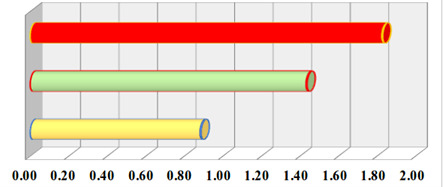
Eggs with functional food qualities were obtained:
The content of total polyphenols of the egg yolk (mg gallic ac equiv/g) was significantly (p<0.05) higher in eggs harvested from the barn fed with Recipe E2 (8% granulated alfalfa, 15% sunflower meal and 0.015% antioxidant from grapes).
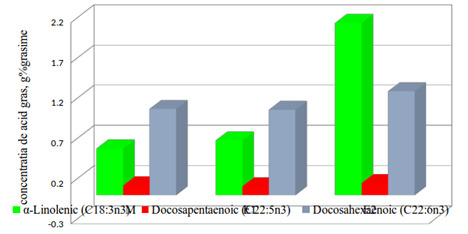
The concentration of α-linolenic acid, omega 3 acid, was significantly higher (p<0.05) in the yolks of the experimental groups compared to group M. The increase of α-linolenic acid was 17.24%, in the case of group E1 compared to group M , while batch E2 registered a 268.96% increase compared to M.
The figure below shows the concentration of omega 3 polyunsaturated fatty acids essential for human health: α linolenic (C18:3n3), docosapentanoic (C22:5n3) and docosahexanoic (C22:6n3).
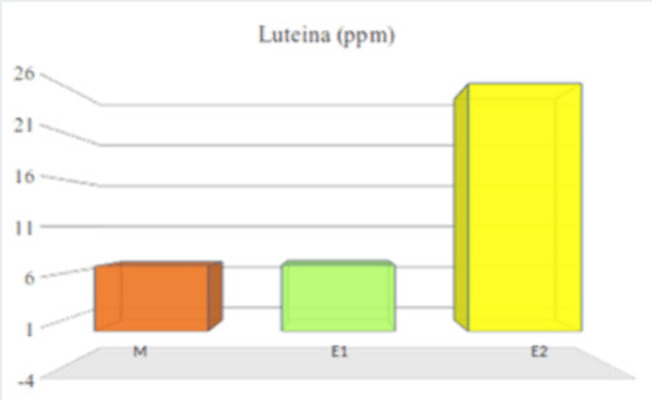
As can be seen in the figure below, the concentration of lutein in the eggs harvested from the feed shed with the experimental recipe E2 increased significantly (p<0.05) to 25,293 ppm from 6,825 ppm (M).
Financial results Due to feed expenses, through the general objective of the project regarding the use of new nutritional solutions for laying hens, rich in cellulose, the development and testing of feed recipes (new nutritional solutions) was aimed at reducing the costs of purchasing the main raw materials, for example of soybean meal – the high cost protein feed resource – with other, cheaper protein sources (eg: granulated alfalfa or sunflower meal) which may mean that they have a higher level of cellulose.
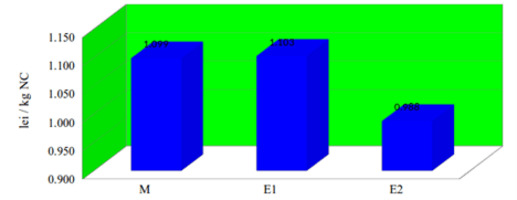
By optimizing the recipes, it was possible to reduce the feed production price, on average, by 10.10% for the experimental lot E2 compared to the price of the feed for lot M (illustrated in the table below). A decrease in the price per kg of fodder was achieved in the hall fed with Experimental recipe 2 by 0.11 lei/kg, i.e. 0.99 lei/kg compared to 1.099 lei/kg respectively 1.103 lei/kg, values obtained in the halls fed with the Experimental recipe 1 and the M recipe respectively.
The conclusion of the results obtained by the coordinator: Experimental Recipe 2 compared to the conventional one (M) was more efficient economically without affecting the health and production of the birds, the quality of the eggs being superior to that reported for batch M. This recipe was the content of a patent application :(registration no. OSIM A/00755 of 28.09.2018 )”COMBINED FEED WITH HIGH LEVEL OF CELLULOSE (7%) FOR LAYING HENS”,; Applicant : SC Avicola Lumina SA, Constanta.
The maturity phases TLR1-TLR3 (idea, expertise, initial results) were completed by the project team at the time of bidding by: (TRL 1) – studying the specialized literature regarding the idea of feeding birds with cellulose-enriched recipes; (TRL3) – Laboratory experiments on production parameters in case of raising the level of cellulose in chicken rations. The implementation of the project starts, through the activities of the first two stages, from TRL 4. In order to develop and validate in the laboratory the results obtained through the experiments from the TLR 3 phase: 6 new fodder solutions, enriched in cellulose, for laying hens were developed. In the second stage, the effectiveness of the new nutritional solutions was validated through microtests carried out in vivo, on laying hens in the 2 experimental halls at IBNA Balotești. The last stage of the project belongs to TRL 5 because the validation of the effectiveness of the two best nutritional solutions from microtests was achieved, at an industrial level, by testing them on laying hens in the production halls of SC Lumina. Through the activities of the last stage, the significance of the obtained results was analyzed, their contribution in obtaining functional eggs and the increase of the coordinator by decreasing feed costs. Documentation for the patent application was made regarding the nutritional solution that was implemented in production. their contribution in obtaining functional eggs and increasing the coordinator by decreasing feed costs. Documentation for the patent application was made regarding the nutritional solution that was implemented in production. their contribution in obtaining functional eggs and increasing the coordinator by decreasing feed costs. Documentation for the patent application was made regarding the nutritional solution that was implemented in production.
By implementing the project, the project coordinator, SC Avicola Lumina, achieved the expected results
– the decrease in the production price of the feed, on average, by 10.10% for the implemented recipe (with alfalfa granules and sunflower meal) compared to the price of the feed used in the usual way, which leads to an increase in the competitiveness of SC Avicola.
– obtaining eggs with a functional character: the concentration of omega 3 fatty acids, the level of lutein and polyphenols and the yolk of the eggs harvested from the chicken house fed with the implemented recipe increased. Ex: α-linolenic acid increased by 268.96% compared to the control hall.
-through the implementation of the recipe, the rules for protecting the environment were respected; microbiological determinations did not indicate risk factors.
– through the innovative results obtained (new fodder recipes, functional eggs) following the implementation of the project, the promotion of innovation at SC Lumina was achieved.
– in addition, the visibility of the research teams from the national institutes (IBNA Balotești and ECOIND respectively) involved respectively USAMV Bucharest has increased
The project “New nutritional solutions for laying hens, rich in cellulose, decisive in increasing the competitiveness of a poultry unit by reducing production costs and increasing the quality of eggs”, promotes the use of a recipe enriched in cellulose by including alfalfa granules and meal in the structure of sunflowers. The obtained results showed that in addition to the possibility of reducing the price of feed, eggs enriched in omega 3 fatty acids, lutein and polyphenols were obtained. Eating these eggs helps consumers prevent the onset of chronic diseases.